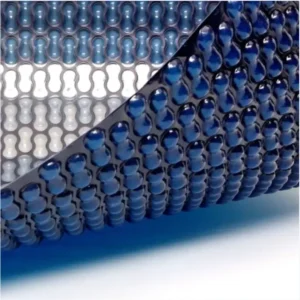
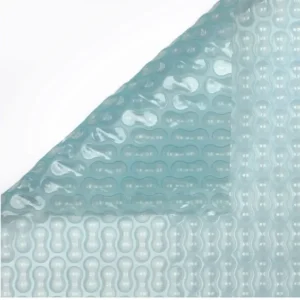
Transform the way you care for your pool with premium Power Plastics pool covers. Designed for South African conditions, these innovative covers help reduce water evaporation, maintain warmer water temperatures, lower chemical consumption, improve safety, and reduce ongoing pool maintenance. Many Power Plastics cover solutions can reduce water loss by up to 98% while helping to improve energy efficiency and pool cleanliness.
Whether your priority is safety, heating, water conservation, or a cleaner pool, there is a Power Plastics solution to meet your needs.
Thermal GeoBubble® Pool Cover
The Thermal GeoBubble® cover is designed to maximise heat retention while reducing water evaporation and chemical loss. Its advanced bubble technology improves durability and efficiency compared to traditional pool blankets.
Sol+Guard® Pool Cover
The Sol+Guard® cover is Power Plastics' premium solar-heating pool blanket. It uses solar energy to raise pool temperatures while significantly reducing water and chemical loss.
EnergyGuard® Pool Cover
The EnergyGuard® cover combines solar heating benefits with algae prevention. Its unique design blocks sunlight from reaching the water while retaining heat and reducing operating costs.
Solid Safety Pool Cover
The Power Plastics Solid Safety Cover provides a secure barrier over your pool, giving families valuable peace of mind. Designed to meet strict safety requirements, the cover offers exceptional protection while reducing water loss and pool maintenance.
LeafNet Pool Cover
The LeafNet cover is designed specifically to keep leaves, twigs, and debris out of your pool, reducing cleaning time and protecting filtration equipment.
Fully Automatic Pool Covers
For homeowners seeking the ultimate pool experience, automatic covers offer effortless operation, exceptional safety, and superior water-saving benefits.
A pool cover can save a large amount of water by stopping evaporation, which is the main cause of water loss in an uncovered pool. Many Power Plastics covers can reduce evaporation by up to 98%, saving homeowners thousands of litres of water every year. The savings are greatest in hot, dry or windy conditions. Less evaporation also means fewer top-ups with fresh water and less chemical rebalancing after refilling.
Will a pool cover make my pool warmer?
Yes. Thermal and solar pool covers can raise water temperature by approximately 6 to 8°C by capturing solar energy during the day and reducing heat loss through evaporation at night. The exact increase depends on the cover type, sunlight, climate and how many hours the cover stays on the pool. Covers also help heated pools hold their temperature, which reduces the running costs of a heat pump or solar heater.
Which pool cover is best for child safety?
The Solid Safety Cover is designed specifically to improve pool safety and can support up to 220kg when properly installed. Unlike solar or thermal bubble covers, which float on the water and are not safety barriers, a safety cover is anchored around the pool so that a child or pet cannot fall into the water. Safety covers should be fully secured whenever the pool is not in use, and they do not replace adult supervision.
Can I still use pool chemicals with a pool cover?
Yes. Pool covers work alongside normal pool chemistry, and chemicals are added as usual with the pump running. Covers can actually reduce chemical consumption, because they limit evaporation and block the UV sunlight that breaks down chlorine. Because less chlorine is lost, test the water before dosing so the pool is not over-chlorinated. After a shock treatment, leave the cover off until chlorine levels drop, to protect the cover material.
Will a pool cover reduce pool cleaning?
Yes. A pool cover keeps leaves, dirt, insects and other debris out of the water, which significantly reduces cleaning, vacuuming and how often baskets and filters need attention. Less debris also means less organic material for chlorine to break down, which helps prevent algae. Debris that collects on top of the cover should be removed before the cover is taken off, so that it does not fall into the pool.
Are pool covers custom-made?
Yes. Power Plastics pool covers are custom-manufactured to fit each pool's specific shape and size, which gives the best evaporation control and heat retention and, for safety covers, the secure fit needed to prevent falls into the pool. A properly fitted cover leaves no large gaps around the edges for heat and water to escape or debris to enter. Accurate pool measurements are needed before a custom cover can be manufactured.
How long do pool covers last?
A pool cover's lifespan depends on the cover type, how often it is used, sun exposure and how well it is maintained. Premium covers made from UV-stabilised materials are designed to give years of reliable performance. To extend a cover's life, keep pool chemistry balanced, avoid leaving the cover on while chlorine levels are very high, rinse it occasionally and store it out of direct sunlight, preferably on a roller, when it is off the pool.
Which cover is best for reducing running costs?
The EnergyGuard® and Thermal GeoBubble® covers are well suited to reducing pool running costs. They limit water loss through evaporation, retain heat so heat pumps and solar heaters run less, and reduce chemical consumption by blocking the UV sunlight that breaks down chlorine. The best choice for a specific pool depends on whether the main goal is heating, water saving or both, as well as the pool's size and local climate.